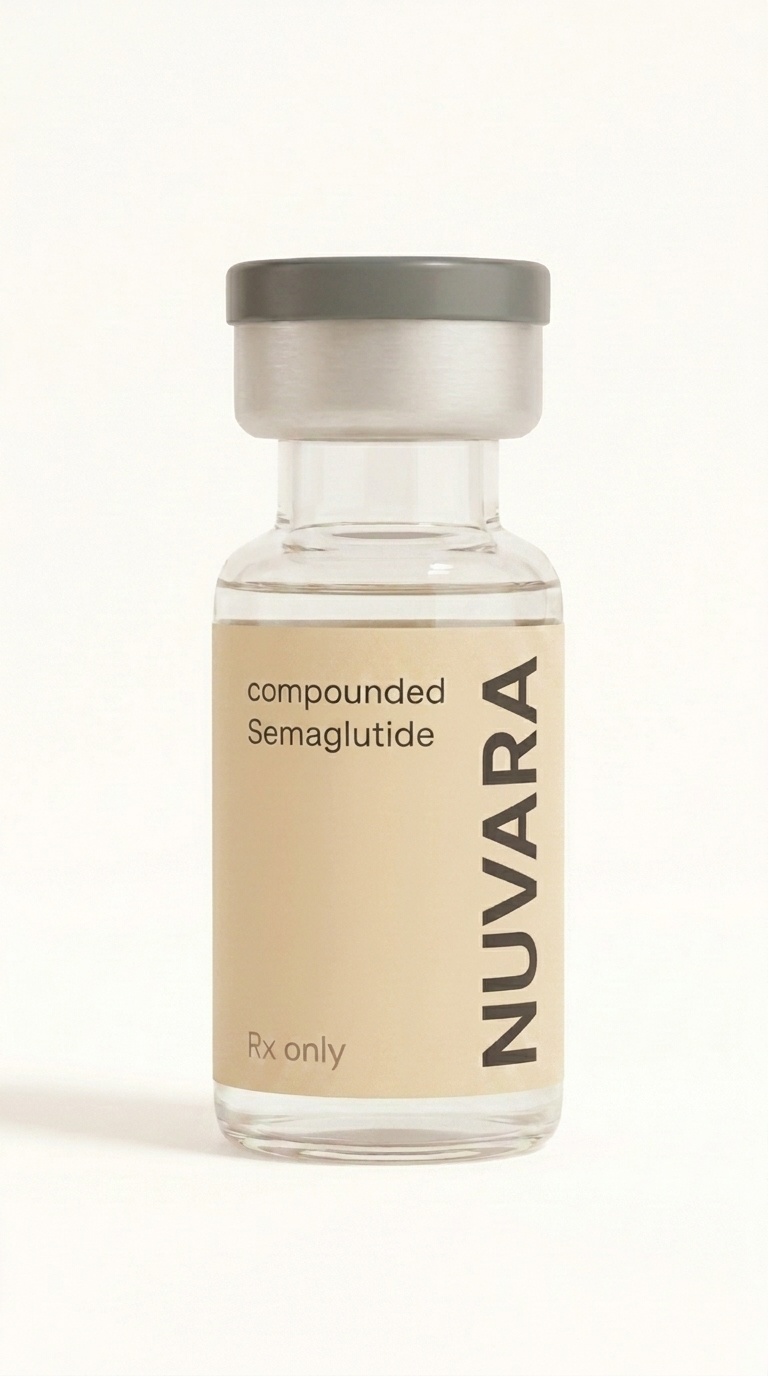
Semaglutide
Metabolic Support + Hormonal Signaling
- Designed to work with the body's natural GLP-1 hormone pathway
- May support a steady blood sugar response throughout the day
- May reinforce natural satiety signaling after meals
- Convenient once-weekly subcutaneous injection
- Long-acting formulation for consistent weekly support
- May support metabolic rhythm alongside nutrition and movement
Semaglutide is a GLP-1 receptor agonist that mimics a hormone your body produces naturally after meals. By activating GLP-1 receptors, it supports the body's own signaling for blood sugar balance, gastric rhythm, and satiety — the metabolic cues that often drift with age, stress, or inconsistent routines.
Requires physician review and prescription approval
Common questions
What is semaglutide?
A GLP-1 receptor agonist — a peptide that activates your body's own GLP-1 hormone pathway. It mimics a hormone naturally released after meals, supporting blood sugar balance and satiety signaling.
How is it administered?
A once-weekly subcutaneous injection, self-administered at home with a small needle. A prescribing provider would walk you through dosing and technique as part of your protocol.
Who might consider semaglutide?
Adults focused on long-term metabolic health and body composition — particularly those whose blood sugar response or satiety signaling has shifted with age, stress, or lifestyle changes. A prescribing provider would evaluate whether it's appropriate based on your individual medical history and goals.
Who should not take semaglutide?
Semaglutide is not appropriate for individuals with a personal or family history of medullary thyroid carcinoma, Multiple Endocrine Neoplasia syndrome type 2, pancreatitis, or active malignancy — and is not recommended during pregnancy or breastfeeding. Additional contraindications may apply based on your medications or medical history.
What are the potential side effects?
The most common are gastrointestinal — nausea, reflux, constipation, or reduced appetite — and these typically ease after the first few weeks as your body adjusts. Rare but serious risks include pancreatitis, gallbladder issues, and allergic reactions. A prescribing provider would review the full risk profile with you before starting.
Do I still need to focus on nutrition and movement?
Yes. Semaglutide supports your body's own metabolic signaling, but sustained results depend on the lifestyle habits that sit alongside it. Think of it as a complement to nutrition and movement, not a replacement.
Important information about compounded GLP-1 therapies
If and when these therapies are available through Nuvara, compounded semaglutide and tirzepatide would be prepared by a licensed US compounding pharmacy based on an individual prescription, where permitted under FDA compounding rules. Compounded versions are not the same as FDA-approved branded drug products and are not interchangeable with them. FDA-approved branded versions of these compounds exist and may be appropriate for some patients; your prescribing clinician will help you understand the differences and determine what fits your situation.
GLP-1 therapies are not appropriate for everyone and carry known risks, including but not limited to: thyroid C-cell tumors (based on findings in animal studies), pancreatitis, gallbladder disease, kidney injury, and serious hypoglycemia when combined with certain other medications. They should not be used by individuals with a personal or family history of medullary thyroid carcinoma or Multiple Endocrine Neoplasia syndrome type 2.
Any decisions about prescribing, dosing, informed consent, and ongoing monitoring would be made by the prescribing provider — not by Nuvara.
Interested in metabolic balance?
Share your goals, and we'll be in touch when Nuvara early access opens in your area.
Join Waitlist to Claim $100 Credit →